Methodology
The research follows a collaborative and iterative methodology involving architects, BIM specialists, and technology developers.
Case study projects were used as testing environments to evaluate the interaction between BIM models and digital compliance platforms.
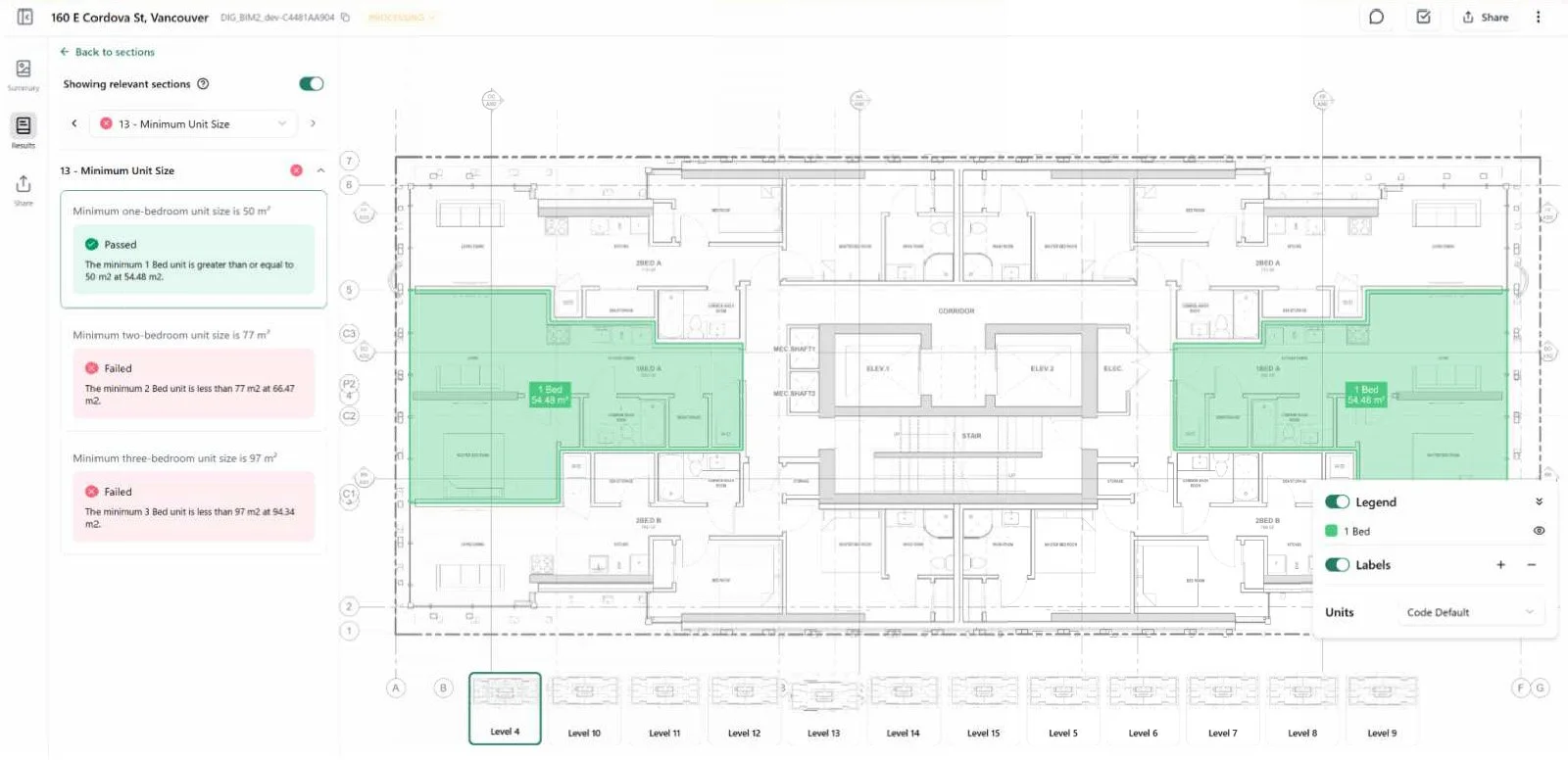
The research aimed to identify how a BIM model should be authored and read by a BIM-enhanced automatic compliance check. This included model preparation, rule translation, software creation and automated testing to assess the system's accuracy in identifying regulatory conditions within the models.
The team refined both modeling and software workflows and rule definitions over multiple iterations, to better align design data with automated checking processes.
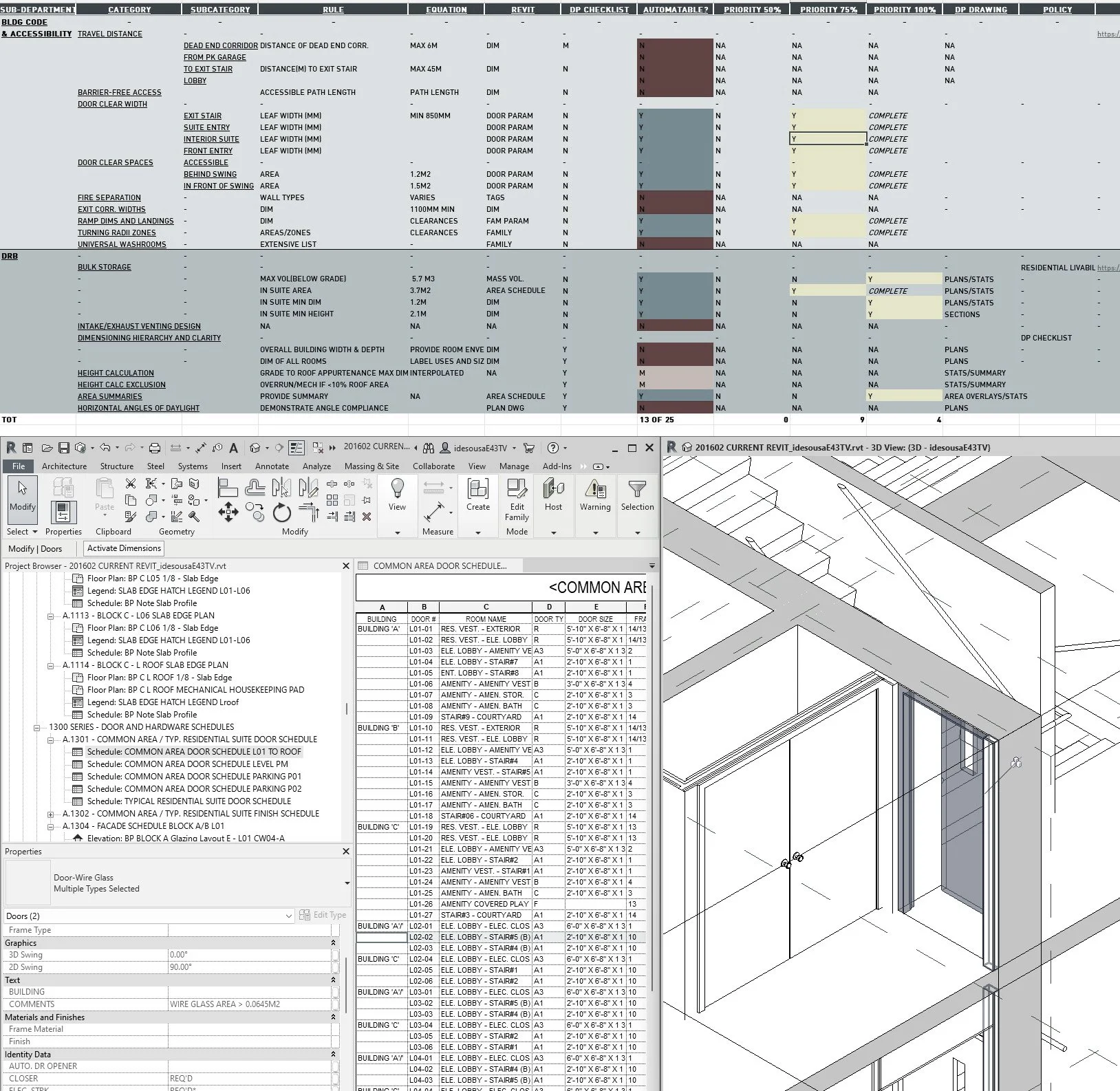
Research began by identifying which municipal building regulations, relevant to multi-residential housing, could potentially be translated into machine-checkable requirements.
Fragmented municipal building regulations were organized by building department and compiled into a database.
This database of rules was tested against case study Building Information Models (BIM), to determine whether automated compliance checks were possible.